Kobideh vs. Seekh Kabab: Meat Cuts, Spices, and Grilling Differences Explained | Bigi Awasaana
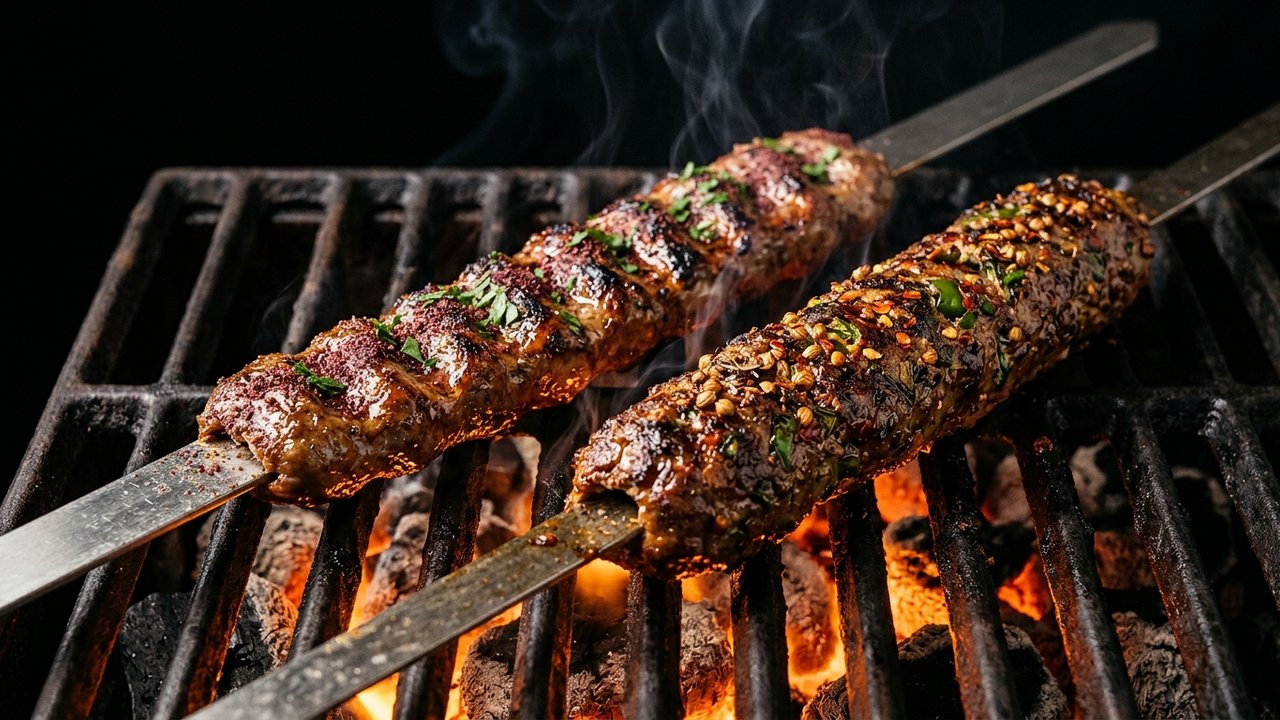
The main difference between Kobideh and Seekh Kabab is their spicing, texture, and skewer technique. Kobideh (Afghan and Persian) blends minced halal beef and lamb with squeezed grated onions and black pepper, shaped onto wide flat sword skewers. Seekh Kabab (South Asian) uses bold garam masala, ginger, and chilies on cylindrical rods.
What Is Kobideh Kabob and How Is It Prepared?
Kobideh (frequently spelled Koobideh or Kabab-e Kobideh) is the undisputed crown jewel of Persian and Afghan charcoal grilling. The word originates from the Persian root kūbīdan (کوبیدن), which translates to "pounded" or "beaten." In ancient Silk Road butcher stalls, cooks hand-pounded cuts of beef and lamb against stone slabs using heavy iron cleavers until the meat reached a creamy, velvety paste.
Today, authentic Kobideh is crafted from coarsely ground beef chuck or flank combined with rich lamb fat at an exact 80/20 meat-to-fat ratio. The fat is crucial: as the skewer hits the intense radiant heat of natural lump charcoal, the lamb fat renders inward, basting the muscle fibers from within and producing an exceptionally tender, melt-in-the-mouth texture.
The seasoning of authentic Kobideh is deliberately minimalistic to let the pure flavor of fire-charred Zabiha Halal meat dominate. The blend includes:
- Grated Yellow Onion Pulp: Freshly grated onions provide natural enzymatic tenderization and sweet caramelized aromatics. Crucially, the onion water is thoroughly squeezed out before mixing.
- Cracked Black Pepper & Fine Sea Salt: Balances savory meat juices.
- Pure Saffron & Sumac: Brewed saffron threads lend a subtle golden hue and delicate floral aroma, while tart wild sumac is dusted over the crust.
- Zero Fillers: Authentic Kobideh contains no flour, breadcrumbs, eggs, or baking soda. The mixture stays on the skewer solely through extensive hand-kneading, which activates the natural meat protein myosin.
What Is Seekh Kabab and Where Does It Originate?
Seekh Kabab (also spelled Sheekh Kebab) traces its roots to South Asia, developing through the royal Mughal kitchens of northern India and Pakistan. The Urdu word seekh (سیخ) translates literally to "skewer" or "spit."
Unlike the gentle, meat-forward profile of Kobideh, Seekh Kabab is celebrated for its assertive, multi-layered spice heat. It can be made with minced beef, mutton, lamb, or finely minced chicken. South Asian grill masters incorporate a pungent masala mixture directly into the raw meat paste before shaping:
- Aromatic Whole & Ground Spices: Toasted cumin seeds, roasted coriander powder, garam masala, crushed cardamom, and pungent clove.
- Fresh Aromatics: Finely chopped garlic, freshly grated ginger root, minced cilantro leaves, and crushed mint.
- Chili Heat: Minced fresh green chilies (such as Indian bird's eye or serrano) and red Kashmiri chili powder give Seekh Kabab its characteristic spicy punch and reddish-brown interior.
- Binders & Texture: To hold the heavy spice blend together, South Asian recipes occasionally add roasted gram flour (besan) or an egg, resulting in a firmer, springier, sausage-like density compared to the delicate softness of Kobideh.
What Are the Key Differences Between Kobideh and Seekh Kabab?
While both dishes feature seasoned ground meat cooked on metal skewers over glowing coals, their flavor, texture, geometry, and cooking dynamics are fundamentally distinct.
| Culinary Feature | Afghan & Persian Kobideh | South Asian Seekh Kabab |
|---|---|---|
| Regional Origin | Afghanistan & Ancient Persia (Iran) | Pakistan & Northern India (Mughal Cuisine) |
| Primary Meat | 80/20 Halal beef chuck and rich lamb fat | Minced beef, mutton, goat, or chicken |
| Spice Profile | Mild, savory, meat-forward: salt, black pepper, saffron, sumac | Bold, pungent, spicy: garam masala, cumin, chili, ginger, garlic |
| Onion Technique | Grated onion with all bitter liquid squeezed dry | Finely minced onion, often incorporated with natural juices |
| Skewer Shape | Wide, flat stainless steel sword (seekh-e pahn) | Narrow cylindrical round or square metal rod |
| Surface & Ridges | Distinct rhythmic thumb-press wave ridges | Smooth, uniform cylindrical tube |
| Texture | Velvety, tender, melt-in-mouth juicy crumb | Firm, dense, springy bite with visible chili flecks |
| Grilling Heat | Open natural charcoal mangal with frequent rapid turns | Charcoal grill or vertical clay tandoor oven |
| Classic Accompaniments | Fluffy basmati rice, grilled tomato, butter, Chatni Gashneez | Hot naan or paratha, mint-yogurt chutney, raw onion rings |
Why Does Kobideh Have Ridges Along the Skewer?
If you look at an authentic skewer of Kobideh, you will immediately notice deliberate wave-like ridges pressed along its entire length. These are not merely decorative; they are the result of an artisanal culinary technique known as naghd or thumb crimping.
When the grill master wraps the cold meat paste around the flat metal blade, they use their thumb and forefinger to press rhythmic indents every inch. This serves three vital culinary functions:
- Maximizing Surface Caramelization: The ridges create peaks and valleys across the meat. Over the high radiant heat of the charcoal mangal, the thin peaks caramelize rapidly, creating crisp, smoky edges while the deeper valleys remain tender and juicy.
- Preventing Meat Slippage: Minced beef and lamb expand as fat renders and water evaporates. The wave indentations physically lock the meat onto the flat metal blade, stopping it from sliding off into the hot coals during flipping.
- Portion Control and Bread Release: When the skewer finishes cooking, the chef places a warm sheet of fresh Afghan flatbread over the skewer and slides the meat off in one effortless motion. The indentations serve as natural bite-sized breaking points.
Why Is Onion Juice Squeezed Out in Kobideh Preparation?
The single most common mistake home cooks and inexperienced restaurants make when attempting Kobideh is leaving the onion water in the meat mixture. Raw yellow onions are over 85% water. If that liquid enters the minced meat, two disastrous things happen:
First, the acidic, sulfurous water prevents the myosin proteins in the beef and lamb from bonding during the kneading process. When placed over 500-degree charcoal embers, the steam pocket inside forces the meat to rupture and drop straight into the fire.
Second, excess onion water boils the meat from the inside out, creating a spongy, rubbery texture instead of a silky, succulent bite. At Bigi Awasaana, our grill masters squeeze grated yellow onions through fine mesh until bone-dry pulp remains, ensuring our Bigi's Kobideh Kabob Skewer ($19.99) achieves maximum structural integrity and natural sweetness without adding a single grain of flour or filler.
Experience Authentic Live Charcoal Kabobs in Reseda
At Bigi Awasaana, we grill every skewer over glowing natural hardwood lump charcoal on Victory Boulevard. We use exclusively 100% hand-slaughtered Zabiha Halal beef, lamb, and chicken with zero machine processing, fillers, or artificial tenderizers.
Explore our live charcoal grill menu or view our latest daily street food specials.
How to Order and Pair Charcoal Kobideh at Bigi Awasaana
To experience the full Silk Road tradition of authentic Kobideh, pair your meal with authentic Afghan side dishes and condiments:
1. Savor the Full Platter with Saffron Rice and Grilled Tomatoes
Our signature Bigi's Kobideh Kabob Skewer ($19.99) comes served alongside long-grain parboiled sella basmati rice, seasoned grilled Roma tomatoes, and fresh house sumac. Squeeze fresh lemon juice over the charred ridges, mix a dab of butter into the steaming rice, and dust generously with tangy sumac powder.
2. Balance the Rich Charcoal Smoke with House Chatni Gashneez
Cut through the rich savory beef and lamb juices with our freshly blended Chatni Gashneez (Afghan green cilantro chutney), prepared daily with whole-bunch cilantro, garlic, green chilies, and pulverized walnuts.
3. Start with Crispy Handcrafted Appetizers
Begin your feast with our golden pan-seared potato flatbread, Bigi's Bolani ($7.99), or our crispy, flaky Bigi's Chicken Samosa ($2.99) or vegetarian Bigi's Veg Samosa ($1.99).
4. Refresh Your Palate with Traditional Beverages and Sweets
Wash down your grilled feast with a chilled glass of savory mint yogurt drink, Bigi's Doogh ($4.99), or finish your meal on a sweet note with our chilled rosewater cardamom custard, Bigi's Firni ($3.99).
Halal Catering: Skewered Charcoal Kabobs for LA Weddings and Events
Looking to treat your guests to the authentic aroma and spectacle of live charcoal kabob skewers? Bigi Awasaana provides premier 100% Zabiha Halal catering across the San Fernando Valley and greater Los Angeles for weddings, private parties, corporate lunches, and family gatherings.
From massive party trays of tender Kobideh, Bigi's Tikka Kabab Plate ($19.99), and citrus-marinated Bigi's Chicken Tikka Kabob Plate ($17.99) to slow-cooked Bigi's Qabuli Palau Lamb Shank ($19.99), our kitchen handles orders of any scale with warm Silk Road hospitality.
Browse our full halal catering packages and request an instant quote online.
Visit Bigi Awasaana in Reseda, Los Angeles
Bigi Awasaana — Born From the Silk Road. Grilled in Los Angeles.
Address: 18411 Victory Blvd, Reseda, CA 91335 (Corner of Reseda Blvd & Victory Blvd, directly across from Reseda Park)
Hours: Monday to Saturday: 01:00 PM – 10:30 PM • Sunday: Closed
Phone: (323) 921-1646
Meat Standard: 100% hand-slaughtered Zabiha Halal meat (beef, lamb, chicken) — zero machine-cut meat or fillers.
View our San Fernando Valley location guide and driving directions.
Frequently Asked Questions About Kobideh vs. Seekh Kabab
Kobideh is an Afghan and Persian specialty made from minced halal beef and lamb, squeezed grated onions, and mild black pepper molded onto wide flat sword skewers with thumb ridges. Seekh Kabab is a South Asian dish flavored with heavy spices like garam masala, cumin, ginger, and green chilies shaped onto round cylindrical rods.
Authentic Kobideh is not spicy hot. It focuses on the rich, savory flavors of high-quality halal beef and lamb fat, caramelized grated onions, cracked black pepper, and tart crushed sumac. In contrast, Seekh Kabab incorporates minced green chilies and red chili powder for a pronounced spicy heat.
The wave-like thumb indentations (naghd) increase surface area for faster, even charcoal cooking, produce crispy caramelized edges, lock the meat securely onto the flat stainless steel skewer during grilling, and create natural portion grooves when sliding the kabob onto flatbread.
You can enjoy authentic 100% Zabiha Halal Kobideh grilled fresh over live natural charcoal at Bigi Awasaana, located at 18411 Victory Blvd in Reseda, CA (across from Reseda Park), open Monday through Saturday from 1:00 PM to 10:30 PM.
